Utility of the Future Center
Arizona State University is in a unique position to launch the nation’s first Utility of the Future Center designed to assist utilities, regulators and consumers in making the move to a clean energy future.
The Arizona Center for Algae Technology and Innovation partners with the rapidly growing algae industry to propel Arizona into the forefront of innovation in biofuels and bio-product research and development.
QESST uses quantum mechanics to solve challenges to harnessing solar power in economically viable and sustainable ways.
The Arizona Solar Summit seeks to position Arizona as the global leader in solar energy through world-class market, industry, policy, and research capabilities.
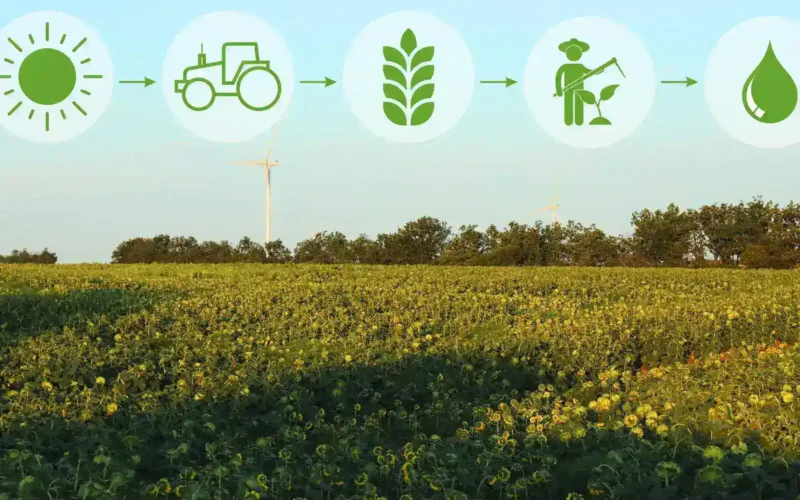
LightSpeed Solutions is a collaborative effort among multiple institutions to develop energy systems that use sunlight, carbon dioxide, and water to produce sustainable, scalable, and infrastructure-compatible liquid hydrocarbon fuels.
The primary objective is to evaluate biochemical (enzymatic) conversion as a potentially viable strategy for converting algal biomass into lipid-based and carbohydrate-based biofuels. Secondary objective is to test the acceptability of algal biofuels as replacements for petroleum-based fuels.
A major societal challenge is to generate electricity with minimal environmental impact. One way to do this is by using the power of the sun. ASU is working to provide efficient, low-cost, and scalable solar electric systems.
Solar panels can produce electricity from sunlight, but what about the liquid fuels that power our vehicles? ASU scientists are working to create renewable transportation fuels from sunlight, carbon dioxide, and water.
Photosynthetic microorganisms are outstanding candidates for producing biofuels because they are more efficient at capturing sunlight energy than terrestrial plants, can achieve very high concentrations of oily components within their cells, and can operate without large consumptions of water and nutrients.
Energy efficiency is currently the least costly energy opportunity in our economy. ASU is working toward a cultural transformation where society has the knowledge and tools to make energy efficiency a consideration in everything it does.
Many people see energy as a technical challenge, but it is not–it is a social, policy, and business opportunity with significant technical dimensions. ASU already envisions energy in these larger terms. We are defining ourselves as a global leader in this critical field.
U.S. educational institutions have helped our country be a world leader for well over 100 years. Yet, now, as ASU President Michael Crow has consistently argued in his vision for ASU as a New American University, our educational institutions must change if the U.S. is to meet the energy challenges of the 21st century.
ASU has a compelling opportunity to partner with energy industry leaders to advance the industry, create an energy ecosystem with widespread benefits to all participants, and quickly commercialize the resulting technology.
Energy policy outcomes develop explicit links between advanced technologies; conservation and sustainable buildings; and underlying economic, social, and cultural behavior. ASU is using system dynamics and agent-based approaches to develop both micro- and macro-scale energy outcome models.
Social Sciences
Critical facets of energy system change are not amenable to research in the natural sciences and engineering, requiring instead social science and humanistic approaches; therefore ASU is launching a new initiative to support social and humanistic studies of energy change.
More about Social Sciences»